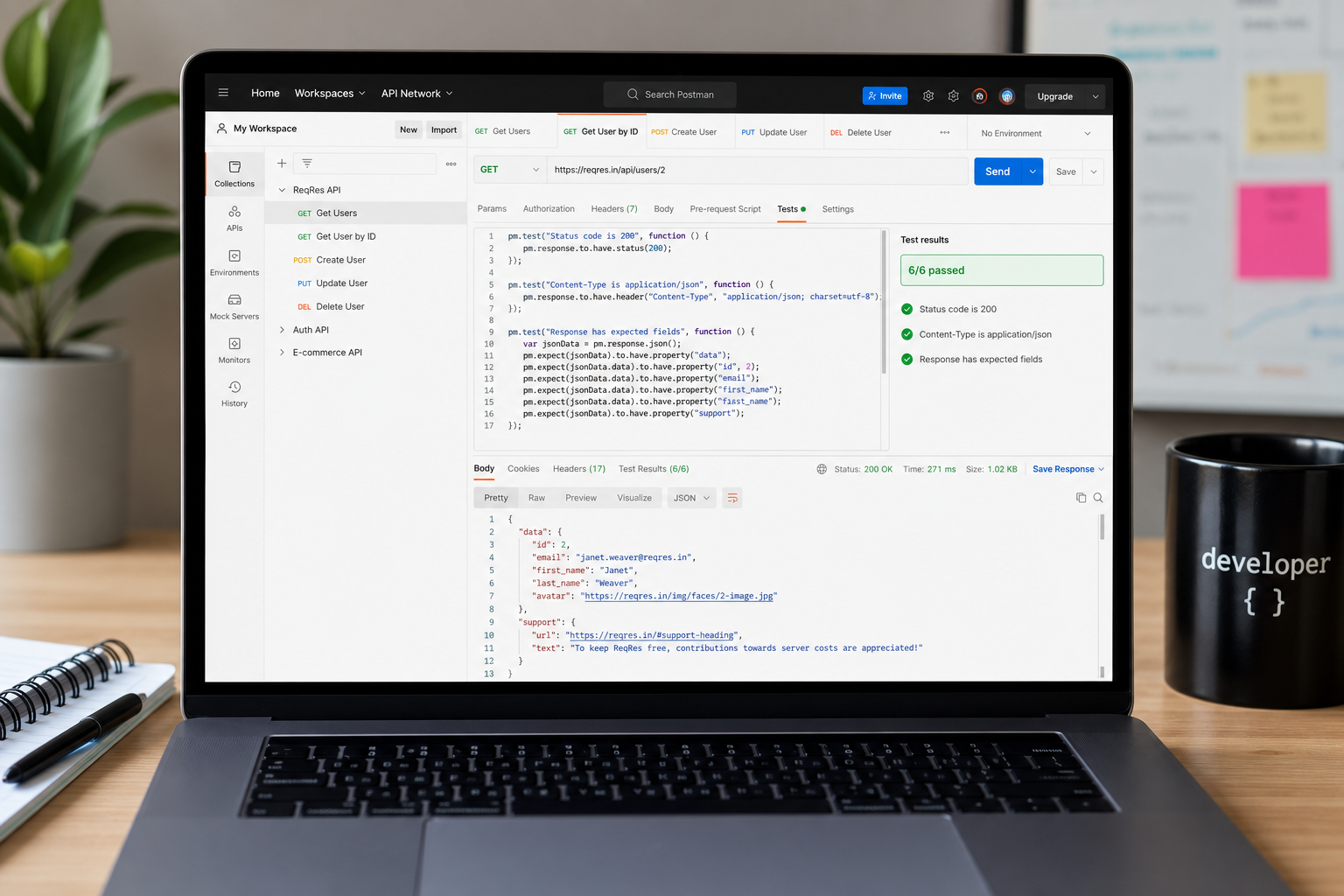
Catch malformed API responses before they break your app. Validation workflows, schema checks, and debugging techniques.
Why API JSON Validation Belongs in Every Integration
API contracts promise structures integrators depend on—field types, required keys, enum values, nested object shapes. Reality drifts: backends deploy hotfixes adding nullable fields, documentation lags, version mismatches expose raw database rows, and third-party webhooks send vendor-specific variants. Validation catches drift before it corrupts downstream databases, crashes mobile apps parsing strict models, or triggers financial miscalculations from missing currency codes.
Validation differs from formatting: pretty-printing aids eyes; schema validation proves semantics. A valid JSON syntax blob can still violate business rules—negative quantities, dates in wrong time zones, IDs as numbers rounded by JavaScript. Automated checks encode expectations executable in CI, staging monitors, and production sampling pipelines.
Developers prototyping integrations paste live responses into JSON Formatter on ToolsFree.org for syntax checks first, then layer schema validators locally. Early syntax failure saves debugging time chasing logical errors in code when the root cause is trailing commas from manual server edits.
JSON Schema, OpenAPI, and Contract Testing
JSON Schema Draft 2020-12 expresses type constraints, pattern formats for emails and UUIDs, minimum/maximum numeric bounds, and conditional subschemas when fields co-depend. OpenAPI 3.1 aligns schema components with documented REST endpoints enabling codegen for TypeScript interfaces and Java records. Keeping schemas versioned beside repositories turns integration assumptions into failing tests when providers change.
Contract testing frameworks like Pact replay expected interactions between consumer and provider teams. Provider verification jobs fetch schemas and validate exemplar responses. For public third-party APIs without bilateral contracts, consumer-side schema tests against recorded fixtures still detect changes—refresh fixtures deliberately when adopting new API versions.
Schema design workshops pretty-print sample payloads alongside schema JSON so reviewers align field descriptions with reality. Use JSON Formatter to normalize whitespace before diffing fixture updates in pull requests.
- Version schemas alongside application code in git.
- Validate both success and error response bodies.
- Test edge cases: empty arrays, null optional fields, max length strings.
- Fail CI on schema drift rather than warning silently.
Runtime Validation Versus Batch Auditing
Runtime validation at API gateways rejects malformed outbound responses before clients see them—expensive but protective for first-party mobile apps you control end-to-end. Inbound validation sanitizes partner webhooks before enqueueing work. Performance trade-offs matter on high-QPS services; compile schemas ahead of time using validators like ajv with cached references rather than interpreting schemas per request naively.
Batch auditing samples production traffic logs—redacted—in hourly jobs validating random percentage of responses against schemas. Spikes in validation failures trigger alerts before all users update apps. Shadow validation compares results without blocking responses during schema rollout grace periods.
Development environments validate aggressively; production may downgrade to monitoring-only for non-critical fields documented in schema as best-effort extensions. Document policy so engineers do not assume lax production equals unimportant schema.
Common JSON Defects in Real API Responses
Trailing commas and single-quoted keys break strict parsers though JavaScript eval culture tolerated them historically. Duplicate keys with last-wins semantics surprise languages treating duplicates as errors. Numbers exceeding IEEE double precision lose integer IDs in JavaScript clients—string IDs prevent bugs. Null versus missing fields alter optional chaining behavior in Swift and Kotlin models.
Date strings without timezone offsets cause off-by-one-day display bugs globally. Enums appearing as unexpected strings after backend deploys should fail validation loudly rather than mapping to default cases hiding data corruption. Empty strings versus null for cleared optional fields need documented semantic differences validated consistently.
Manual debugging starts by confirming syntax via JSON Formatter, then applying schema validator CLI against saved response files. Include failing instance paths in error messages returned to API clients during development modes only—never leak internal schema details publicly in production error bodies.
{\n "$schema": "https://json-schema.org/draft/2020-12/schema",\n "type": "object",\n "required": ["id", "status"],\n "properties": {\n "id": { "type": "string" },\n "status": { "enum": ["open", "closed"] }\n }\n}Webhook and Event Payload Validation
Webhooks push JSON events asynchronously—payment succeeded, shipment dispatched—often unsigned or signed with HMAC headers requiring separate verification before schema validation. Order matters: authenticate source, validate schema, then execute business logic idempotently. Replay attacks duplicate valid JSON bodies; idempotency keys and timestamp windows mitigate.
Cloud event wrappers nest actual payloads inside data attributes; schemas should target inner payloads after unwrapping consistently. SNS, SQS, and Pub/Sub add envelope layers easy to mis-parse if fixtures only include inner business objects without transport metadata.
Store raw webhook bodies redacted for replay in staging validators when investigating production discrepancies. Paste into JSON Formatter to compare pretty views of expected versus actual side-by-side during support escalations with payment processors.
Mobile, TypeScript, and Codegen Alignment
Codegen from OpenAPI produces types assuming schemas accurate. Drift between runtime responses and generated interfaces causes undefined access crashes on mobile released monthly—not daily like web. Automated fixture validation on every backend deploy gates mobile release candidates.
TypeScript strict mode partially validates at compile time but cannot replace runtime checks for external APIs. zod or io-ts schemas shared between frontend and backend unify validation logic. Browser tools help explore ambiguous fields before encoding them into zod objects prematurely frozen wrong.
Backward compatibility testing adds optional fields in schemas before production deploys them, ensuring old app versions ignore unknown keys gracefully while new versions consume them—validate both old and new schema versions against same response stream during migrations.
Practical Validation Workflow for Support and QA
QA repro steps attach formatted JSON from JSON Formatter highlighting missing fields circled in screenshots. Support tier-one validates customer-provided API responses are JSON at all before escalating—half of “API broken” tickets are HTML error pages pasted into JSON-only pipelines.
Runbooks link schema repositories and browser validation tools for on-call engineers verifying whether incident stems from provider change or internal regression. Post-incident actions add new schema tests reproducing discovered invalid payloads preventing recurrence.
ToolsFree.org JSON Formatter fits early triage; integrate findings into permanent schema tests in repositories. Validation culture shifts left when formatting and schema tools sit one click apart in browser workflow muscle memory.
Publish internal cheat sheets mapping common provider error shapes—Stripe, Shopify, Salesforce—to expected schema files so new support hires validate confidently on day one. Include exemplar invalid payloads annotated with validation error paths, turning historical incidents into training assets rather than forgotten war stories.
Putting This Guide Into Daily Practice
Knowledge only helps when it becomes habit. Bookmark this page and return when you hit the specific problem it describes—search engines surface long-tail queries like the ones covered here because people need answers at the moment of failure, not during leisurely reading. Save worked examples in your team wiki with before-and-after snippets so junior developers inherit fixes instead of rediscovering them.
Pair reading with immediate experimentation. Open the relevant ToolsFree.org tool in an adjacent browser tab, paste real data from a sanitized log, and confirm the output matches expectations. Client-side tools mean you can iterate ten times in a minute without rate limits or account walls. Screenshot successful workflows for internal training decks.
Search rankings reward depth, clarity, and pages that satisfy intent completely. This article targets practical completion: you should leave with a checklist, not vague awareness. When standards evolve—NIST password guidance, WCAG revisions, new CSS color spaces—revisit authoritative sources and update your internal playbooks. ToolsFree.org publishes guides aligned with its free utilities so theory and practice stay connected.
Questions Teams Ask During Code Review
Reviewers should ask whether this change affects external integrations, published APIs, or user-visible output. If yes, link to the relevant test fixture and manual QA steps. Documentation updates belong in the same pull request as behavior changes—not a follow-up ticket that never ships.
Performance matters for client-side utilities: large payloads may slow browser formatters on low-end phones. Chunk huge JSON files in editors or use streaming parsers on the server. ToolsFree.org tools target everyday payload sizes developers paste during debugging, not multi-gigabyte dumps.
Share this guide with support staff who field customer tickets about malformed data. First-line triage improves when non-engineers can validate JSON or URLs before escalating to on-call.
Frequently Asked Questions
Teams often ask whether browser-based tools are safe for confidential data. ToolsFree.org runs utilities client-side without uploading input to servers—a model described in the privacy policy and relevant when handling credentials, tokens, or customer records during debugging.
Another common question is how this topic relates to automated testing. Unit tests catch regressions; manual validation catches one-off vendor payloads and copy-paste errors from spreadsheets. Use both layers rather than treating passing CI as proof that production traffic will always parse.
Finally, people ask which official standard to cite in compliance documents. Link primary sources—IETF RFCs, W3C recommendations, NIST special publications—rather than blog summaries alone. This article summarizes practical steps; your security questionnaire may require direct citations to those authorities.
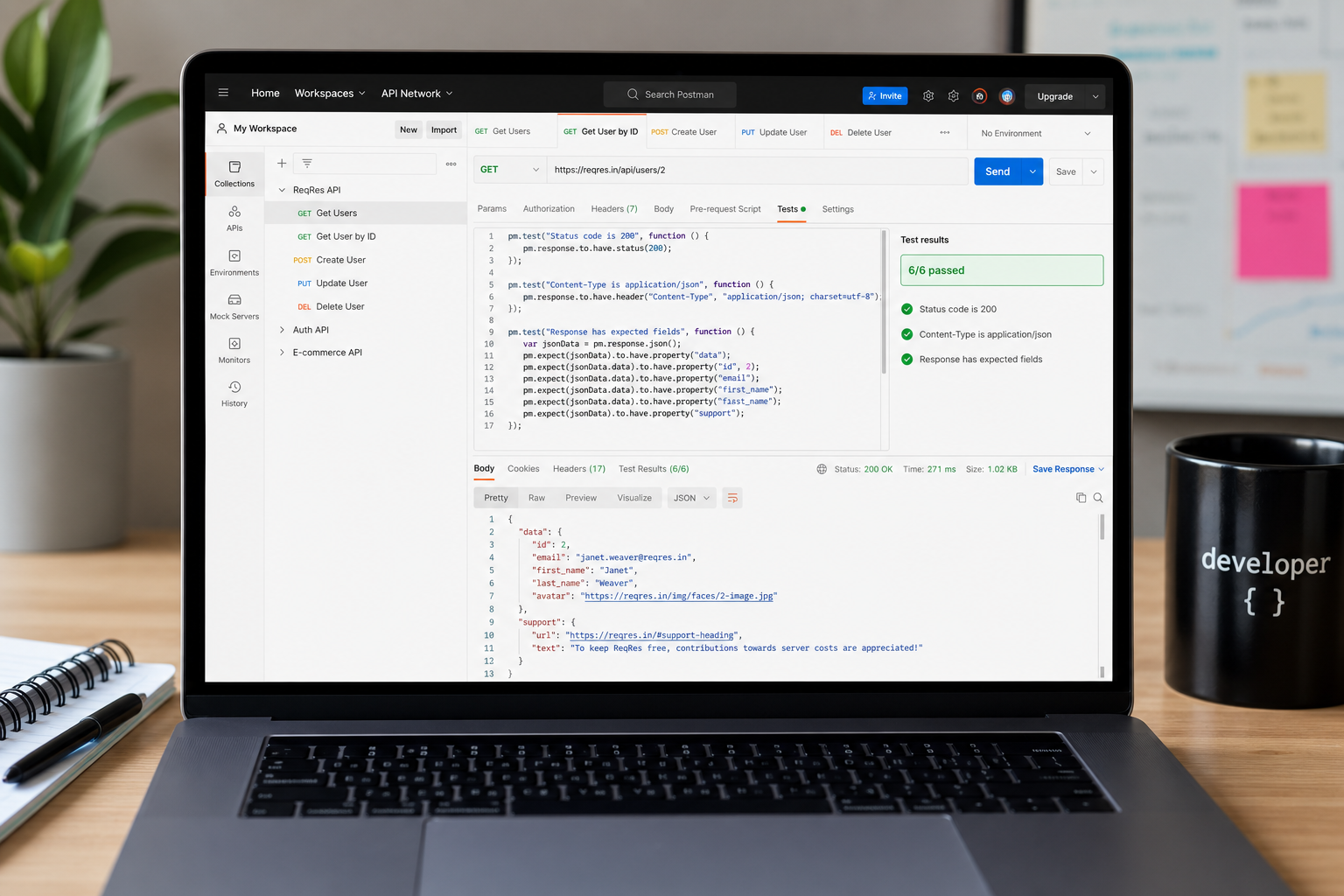
Format and inspect API JSON responses before running schema validation. JSON Formatter →